
Conducting a masterpiece
Our Head of Music explains the beauty and challenges of Wagner’s Lohengrin.


Most of Richard Wagner’s compositions are true epics. His crowning achievement, the Ring Cycle, stretches across four individual operas, and was innovative in its seamless melding of music and drama.
But just before he started on the Ring Cycle, Wagner wrote another epic masterpiece: Lohengrin, the story of a mysterious knight who saves a noble maiden, marries her, and then forbids her to ask his origin.
We’re performing the opera for the first time in two decades at the Arts Centre Melbourne this May, in a monumental new staging starring the world's most in-demand tenor, Jonas Kaufmann.
Our Head of Music, Tahu Matheson, is a true Wagner aficionado and will be conducting. We spoke to him about his passion for Wagner and how he’s preparing to dive head first into its world.
Opera Australia: As we know, you're a huge fan of Wagner's work. What excites you about conducting Lohengrin?
Tahu Matheson: What is not exciting about conducting Lohengrin? The power and scope of the piece is astonishing.
It’s so interesting because it’s said to be tremulously balanced on the brink of ‘music drama’. It still has some of the forms of grand opera – there are grand choruses, there’s a knight in shining armour, there’s a supernatural element and a historical element – but it really looks forward to the innovation and what he achieved in the Ring Cycle.
OA: What makes it a unique work in Wagner’s output?
TM: It’s famously the one before the Ring Cycle. In Lohengrin, you can feel him grappling in the score with how to deal with the concepts that come up in the Ring Cycle, when he gets very psychoanalytical.
In one way, Lohengrin is quite simple: here comes this bloke who says "don’t ask me any questions", and finally she asks a question. But what that means psychologically – and how he can draw that out musically into this massive opera – is what started to interest him.
For me, this is where it really starts with Wagner.
How quite simple ideas or simple symbols offer a window into the human unconscious.
In so many myths there are these ideas: in Lohengrin, you’re not allowed to open a question, Pandora is not allowed to open a box, Prometheus is not allowed to bring fire to the people, Eve isn’t allowed to eat the apple.
Lohengrin at La Monnaie (2018). Photo: Baus.

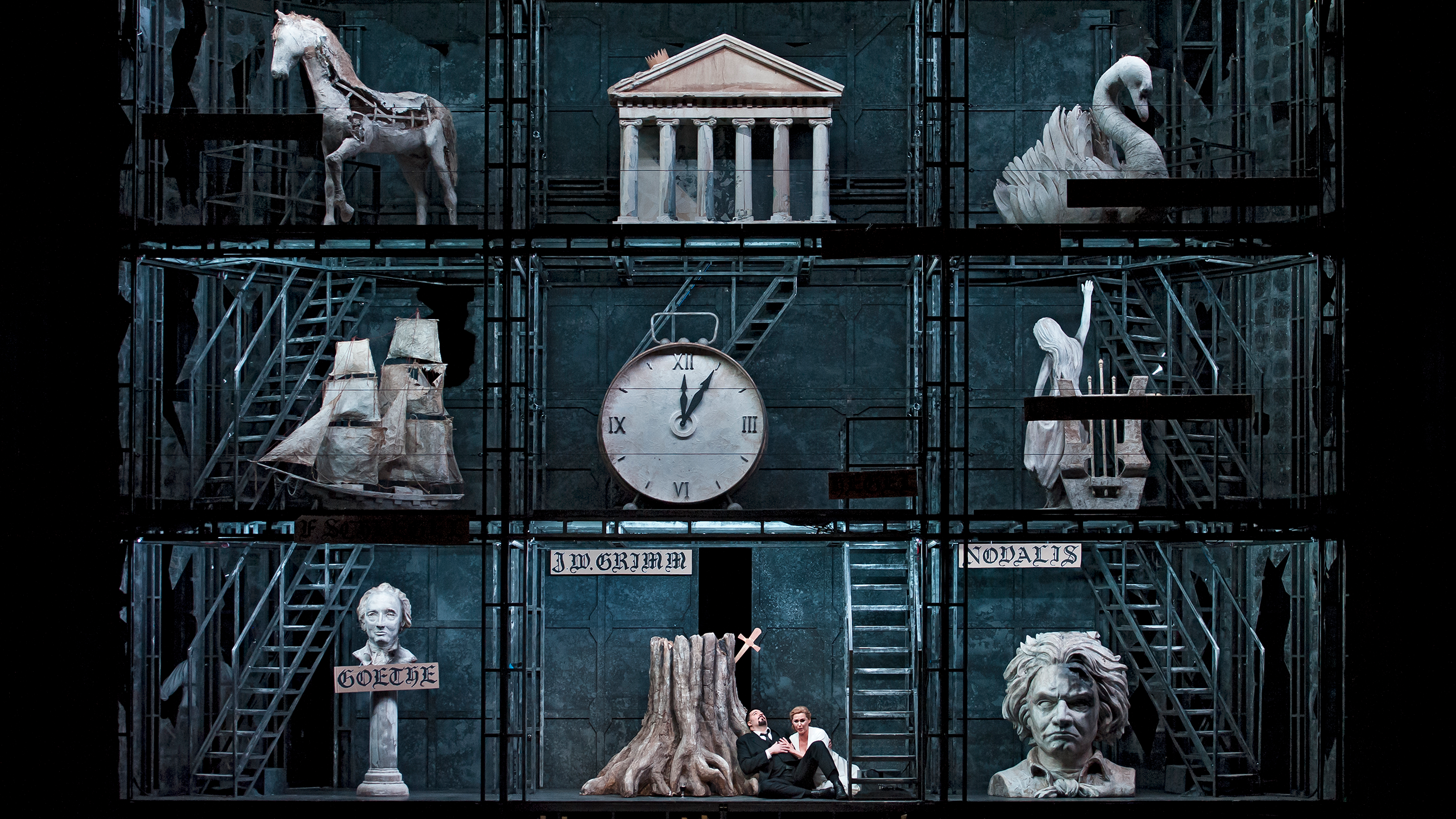
OA: How would you describe the experience of hearing this score played the whole way through in a theatre?
TM: Wagner really wanted you to have an incredibly deep, verging on religious, experience, that would trigger some sort of change in you.
He wanted you to feel like the Ancient Greeks, who would go to watch a massive play by Sophocles and stay all day, and have this cathartic experience going through absolutely wonderful and absolutely horrific stuff. He wanted you to have that sort of experience.
Musically, that absolutely happens.
By the end, you are transformed. It’s so powerful and overwhelming.
OA: How did you personally come to be so passionate about Wagner’s music?
TM: That’s quite easy to answer. I listened to Tristan und Isolde once when I was about 20 and that was it.
I was studying to be a pianist, and when you study the history of music from a pianist’s point of view, you study symphonies and piano works. You definitely don’t look at opera composers like Rossini, Donizetti and Verdi. Eventually you study Berlioz, Bruckner, Brahms, Debussy. You wonder how they evolved, and you can’t believe the key was some opera composer!
Somebody said to me: if you want to understand how music developed, you need to listen to Tristan und Isolde. That was it. I listened over and over, not even really interested in the words. I just sat there with the orchestral score in the library, incredibly moved, in tears. It was quite embarrassing.
But I just didn’t know music like that existed.
One day I thought I should really look at the words. And I was just an emotional wreck again. And that’s when I knew I needed to get into the art form.
Tahu Matheson conducting in a workshop for Whiteley (2018). Photo: Prudence Upton.
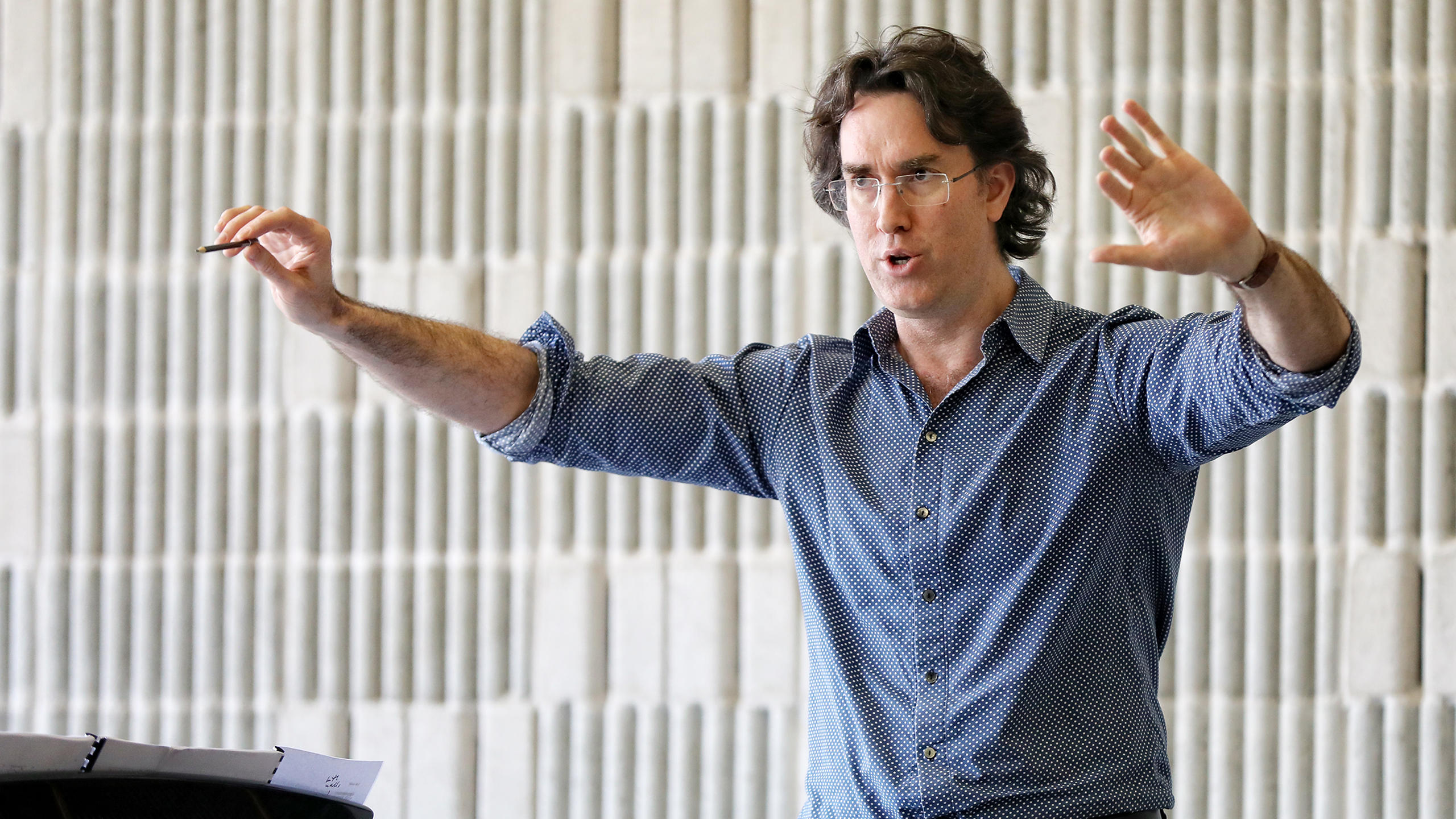
OA: Like a lot of Wagner’s work, Lohengrin is long, running to almost four and a half hours, with two intervals. It requires everybody involved in a performance to have real stamina – both physical and mental – how do you prepare as a conductor?
TM: You just have to know it back to front. The concentration is difficult, but if you really know it, you’re able to do it.
Musically, Wagner is always trying to make you think horizontally – what’s coming next, what’s been, and how it relates to the present. It’s never just the moment you’re in.
When you start to feel that – and you feel the connection between all the parts of the score – it starts to shrink.
When you first start learning the score, you really don’t know how you’ll do it, but slowly it becomes achievable.
OA: What are the challenges of conducting the score?
TM: We have superb singers for this one, but the challenge is to always make these hugely difficult roles possible for the singers. You have to be listening all the time to know when you might need to help them by moving the orchestra. And you need to then prepare the orchestra so they can be flexible enough to support the singers.
OA: Finally, it’s a huge coup for Opera Australia to have Jonas Kaufmann singing the title role. He’s incredibly in demand. What is it about him as a singer that has taken him to those heights?
TM: Kaufmann is one of those singers who is not disappointing. You listen to him in a recording and you think it’s incredible, and then you hear him live and it’s still incredible.
And then he can sort of do anything. He has a stunning voice, with quite a baritonal sound and an unbelievable top. And he can go from this big sound to a very soft pianissimo without losing any intensity, focus, and certainly without losing the audience.
He keeps you interested and fascinated the whole time.
The sound itself is just wonderful, but his phrasing and what he does with the text is really second to none.
Lohengrin is at Arts Centre Melbourne from 14 May 2022.
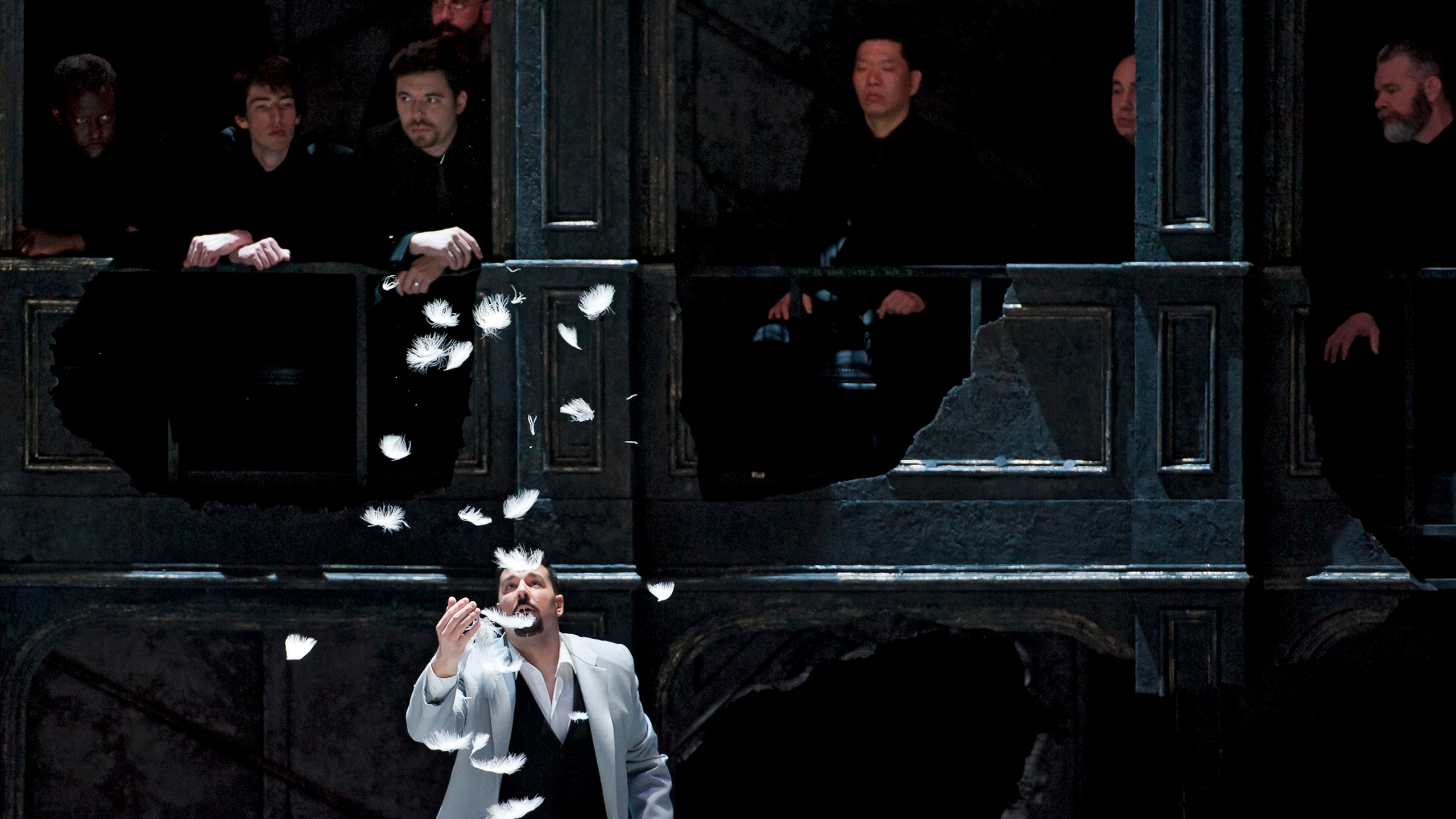
Lohengrin at La Monnaie (2018). Photo: Baus.
 Built with Shorthand